Pruning is the most common tree work carried out on Australian properties and, unfortunately, the most commonly botched. Trees do not heal in the way animals do. They compartmentalise damage, walling off wounds and growing around them, which means every cut is permanent and every bad cut is a defect the tree carries for life. Professional tree pruning Sydney homeowners commission is built around that reality: fewer cuts, placed correctly, timed to the species. Done well it extends a tree’s life and reduces risk. Done badly it creates the hazard it was meant to prevent.
There is a clear objective behind every professional tree pruning Sydney job. Deadwooding removes failed limbs before they drop. Crown thinning improves light and air movement through a dense canopy. Crown lifting raises the lowest branches for clearance over paths, driveways, and roofs. Selective reduction shortens specific limbs that have grown out of balance. Each of these has a defined technique and a defined limit. What none of them involves is cutting the canopy back to stubs, which is a practice that damages trees and invites decay every single time.
Why Amateur Pruning Causes Lasting Damage
The two most frequent errors are flush cuts and stub cuts. Cutting flush into the trunk destroys the branch collar, the zone of tissue the tree relies on to seal the wound, so decay walks straight into the trunk. Leaving a long stub is the opposite failure: the stub cannot seal at all and simply rots back toward the trunk. Topping is worse than both, triggering a mass of weakly attached epicormic shoots that snap in wind and shorten the tree’s life dramatically. All three mistakes are easy to make and impossible to undo, which is the core argument for hiring someone who understands the biology.
Correct Technique in Practice
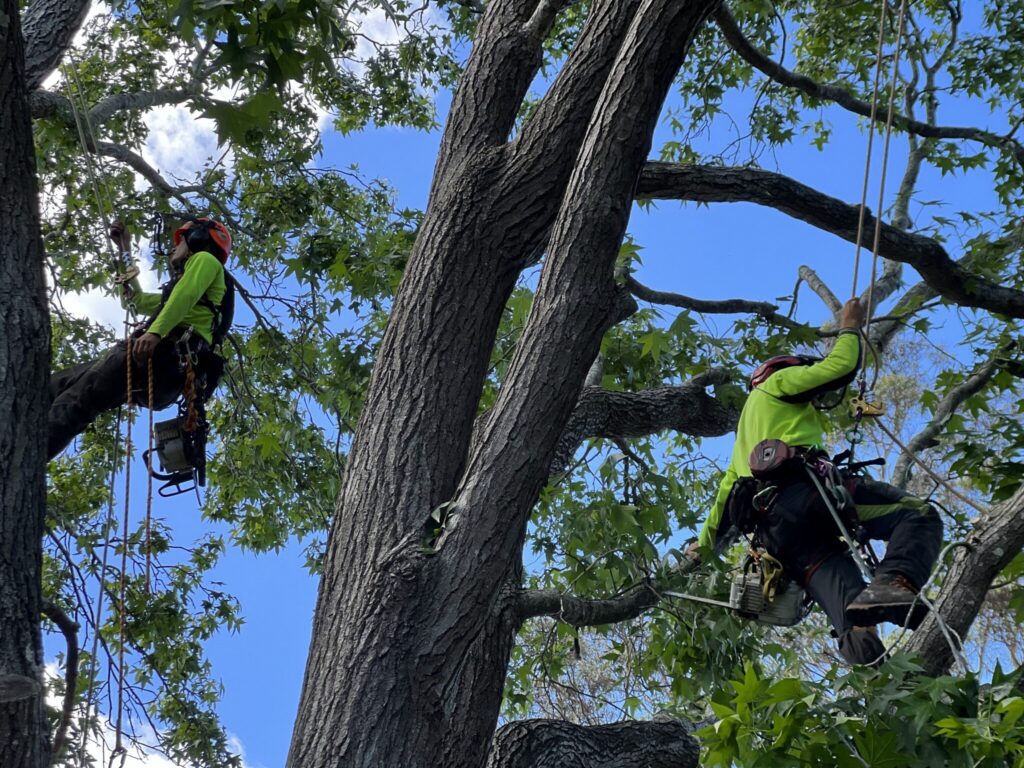
Skilled tree pruning Sydney crews work to established standards, and practitioners with formal arboriculture training are taught why each cut sits where it does. The cut sits just outside the branch collar, angled to shed water, with no bark tearing. Anything of weight gets a three-cut approach so the limb does not peel bark down the trunk as it falls. Total live canopy removal in a single season stays conservative, since a tree stripped too hard loses the photosynthetic capacity it needs to recover. Tools are kept sharp and, where disease is present, sterilised between trees. None of this is glamorous, and all of it shows up in how the tree looks in three years.
- Deadwood and hazard limb removal for immediate risk reduction
- Crown thinning to improve light penetration and air movement
- Crown lifting for clearance over roofs, paths, and driveways
- Selective reduction to correct unbalanced or overextended limbs
- Formative pruning on young trees to build sound structure early
Seasonal Timing Around Sydney
Timing matters more than most people realise. Late winter suits many deciduous species, since the structure is visible and the coming growth flush seals wounds quickly. Summer pruning slows growth, which is useful for controlling size but risky in extreme heat when a suddenly exposed trunk can scald. Many natives tolerate light work year-round but resent heavy reduction during peak flowering or seed set. Pruning during humid, wet stretches raises infection pressure for species vulnerable to airborne pathogens. Dead limbs, of course, come out whenever they are found, because a hazard does not wait for the right season.
Pruning as Storm Preparation
The most cost-effective pruning happens before storm season rather than after it. Deadwood is the first thing to fall in high wind, and it is also the cheapest material to remove because it requires no judgement about live canopy. Beyond deadwooding, reducing overextended limbs shortens the lever arm that wind loads act on, and thinning a dense canopy lets air move through rather than pushing against a solid sail. Weak unions with included bark are worth identifying early, since they are the classic failure point in mature trees. A single autumn inspection with targeted tree pruning Sydney work typically costs a fraction of one emergency call-out and often prevents it entirely.
How Often Trees Need Attention
Young trees benefit from light formative tree pruning Sydney visits every two to three years, which is the cheapest structural investment you will ever make in a tree. Correcting a competing leader at three metres takes thirty seconds; correcting it at fifteen metres takes a crew and a rigging plan. Mature trees generally settle into a three to five year cycle for deadwood and clearance work. Fast-growing species near power lines or buildings need more frequent attention, while slow-growing established specimens may go longer. Annual inspection with pruning only as required beats pruning on a fixed schedule regardless of need.
Working Safely at Height
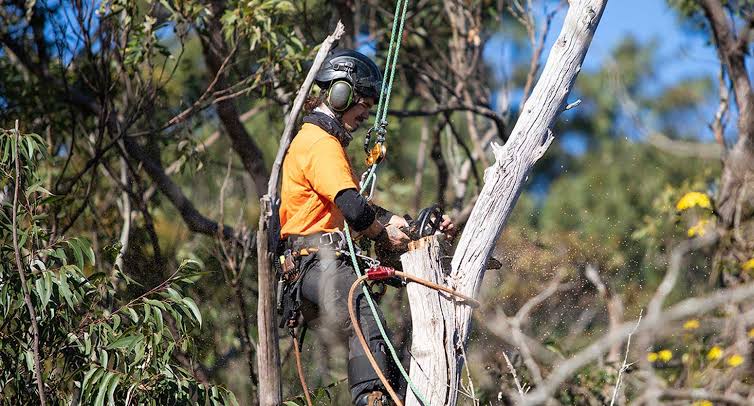
Most pruning happens above ground level, which is precisely where this trade becomes dangerous. Ladders and domestic chainsaws are a bad combination and account for a grim share of serious injuries every year. Regulator guidance on working safely with trees sets out the expected controls: proper access selection, inspected climbing systems or elevated work platforms, drop zone management, and clearances around overhead powerlines. Anything near a service line is not a homeowner job under any circumstances, and reputable operators will coordinate with the network authority rather than working around live conductors.
Choosing Your Provider
Ask a prospective contractor to describe what they intend to remove and why. A professional answers in specifics: this deadwood, that limb over the roof, roughly this percentage of live canopy. Anyone offering to take the tree back by a third to make it easier to manage should not be near your trees. Check certification, confirm insurance, and look at photos of work they completed a year or two ago rather than the day they finished. Quality tree pruning Sydney looks almost unremarkable when it is done well, and that is exactly the point.
