Lopping is one of the most misused words in Australian tree care, and clearing it up saves people money and trees. In arboricultural terms, lopping means cutting limbs back to arbitrary points with no regard for branch structure, which is the technique that produces those bare, stubbed silhouettes you see along older streets. When homeowners search for a tree lopping service, though, they almost always mean something different and entirely reasonable: they want a tree made smaller and safer. Good operators respond by quoting proper crown reduction, which achieves the size goal without wrecking the tree.
The distinction is practical rather than academic. A tree cut back to stubs responds with dense epicormic regrowth from dormant buds under the bark. Those shoots are weakly attached, grow fast, and are far more likely to fail in wind than the original limbs. Meanwhile the open stub cannot seal, so decay moves inward. Within five to ten years the tree is bigger, denser, and structurally worse than before the work. A competent tree lopping service will explain this and offer a technique that actually holds up.
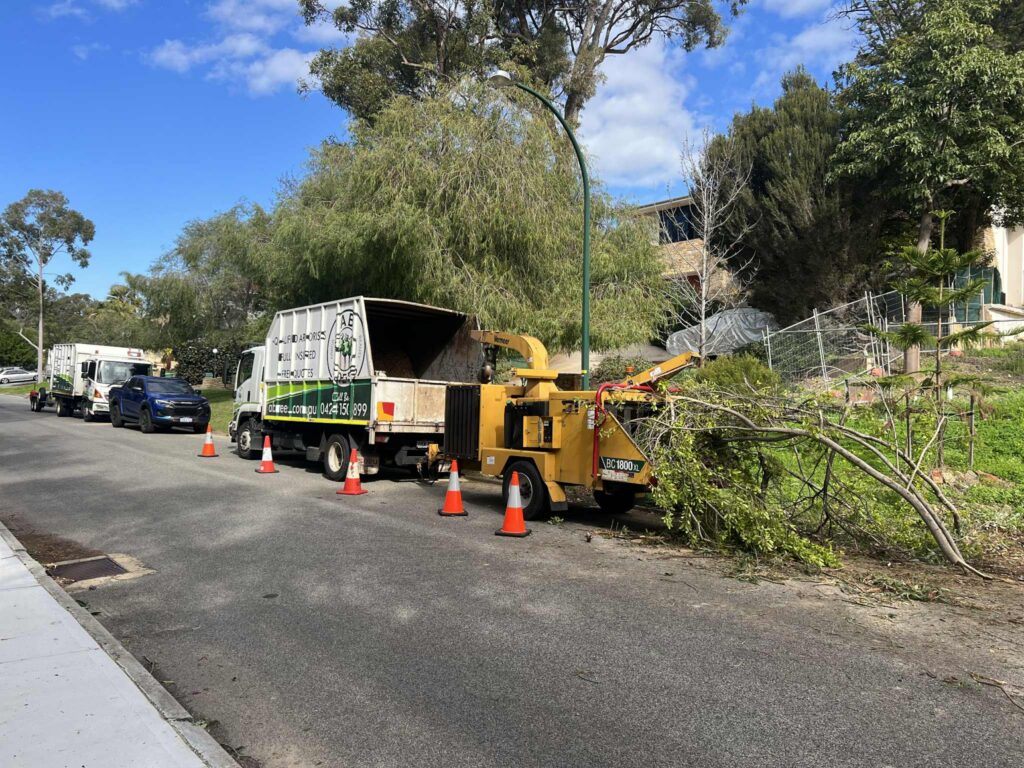
Crown Reduction Done Properly
Correct reduction works to the tree’s own architecture, which is core material in formal arboriculture training rather than something picked up on the job. Each limb is cut back to a lateral branch large enough to take over as the new leader, generally at least a third of the diameter of the limb being removed. That lateral continues growing, the wound seals, and the tree keeps a natural outline at a smaller size. Total canopy removed in one pass stays modest, typically well under a quarter of live foliage. The result looks like a tree rather than a hat rack, and it does not trigger the panic regrowth that follows crude cutting.
When Size Reduction Is the Right Call
There are plenty of legitimate reasons to reduce a tree. Limbs extending over a roof create leaf litter, gutter blockage, and impact risk. Overextended branches on a tree with a history of failure need shortening to cut the lever arm. Encroachment on a neighbour’s airspace, shading of solar panels, and clearance for service lines are all valid drivers. A tree lopping service focused on reduction rather than removal is often the cheaper outcome too, since keeping a mature tree preserves shade, screening, and property value that a replacement takes fifteen years to deliver.
- Crown reduction to lateral branches, not arbitrary stubs
- Selective removal of overextended or roof-threatening limbs
- Staged reduction across seasons for heavily overgrown trees
- Retention of natural form and canopy density
- Follow-up inspection to manage regrowth correctly
Species Response Varies Enormously
Not all trees tolerate reduction equally. Many eucalypts respond to heavy cutting with vigorous epicormic growth that needs ongoing management, while some conifers will not reshoot from bare wood at all, meaning a hard cut leaves a permanent dead section. Fruit and ornamental species have well-established pruning tolerances. Figs and other vigorous evergreens can take reduction reasonably well but grow back quickly. An operator who quotes the same approach for every tree on the street is not assessing species response, and that is a reliable signal to get another opinion before authorising work.
Staged Reduction Over Time
When a tree has grown well beyond its space, the honest answer is usually that it cannot be brought back to target size in one visit without damage. Staged reduction spreads the work across two or three seasons, taking a conservative percentage each time and letting the tree recover in between. It costs more in total because of repeat mobilisation, but it preserves the tree and avoids the regrowth cycle. If the required reduction is so severe that staging cannot achieve it, that is genuinely the point to discuss removal and replanting with a species suited to the space. Get that recommendation in writing, because it is the document that justifies the decision to a council, a strata committee, or an insurer later on.
Safety and Access Considerations
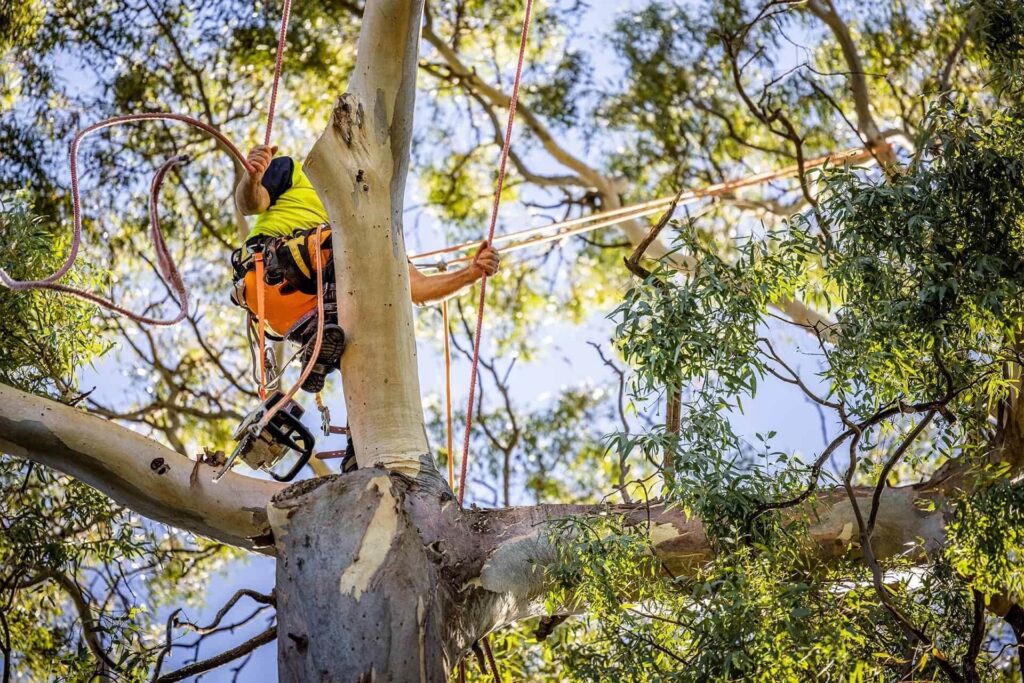
Reduction work happens in the outer canopy, at height, often over roofs and fences, which makes it more technically demanding than a straightforward removal in some respects. Published tree lopping safety checklist for this type of work covers the recurring risks: falls from height, chainsaw use in awkward positions, falling objects, and powerline proximity. Any reputable tree lopping service will set exclusion zones, use inspected climbing systems or an elevated work platform, and refuse to work close to live conductors without network coordination. Ladders and a hired chainsaw are how homeowners end up in hospital.
Aftercare and Managing Regrowth
Reduction is not a one-off event. The tree will push new growth in response, and how that growth is managed determines whether the work holds. Water deeply during the first dry spell after major pruning, mulch the root zone, and avoid fertilising heavily, which only drives more growth to cut later. Wound dressings and sealants are unnecessary and can trap moisture against the cut. Book an inspection two to three years out so new leaders can be thinned early, while it is a small job rather than another full reduction. Photographing the tree straight after the work gives you a useful reference point for judging how hard it has pushed back since.
Choosing an Operator
The test is simple: ask how far back they intend to cut and where the cuts will sit. Anyone who talks about taking a third off the top or cutting it back hard to sort it out for a few years is quoting the damaging version. A professional talks about laterals, percentages of live canopy, and species response. Check certification and insurance, ask for photos of reduction work completed two or more years ago, and let the regrowth in those photos tell you whether the tree lopping service knows what it is doing.
