Introduction
Trees enhance property value, provide essential shade, and contribute significantly to environmental health through oxygen production and wildlife habitat. These silent giants beautify landscapes whilst filtering air pollutants and reducing urban heat islands.
Despite their benefits, trees cannot signal distress when structural problems or disease threaten their stability. Property owners often struggle to distinguish between normal seasonal changes and genuine tree safety concerns that demand urgent attention. A healthy-looking canopy may conceal serious internal decay, whilst subtle trunk cracks can indicate imminent failure.
Understanding tree lopping signs becomes critical when a tree’s condition deteriorates to the point where it endangers people, buildings, or infrastructure. Professional tree health assessment identifies warning indicators that untrained eyes frequently miss.
This guide examines seven critical signs that indicate your tree requires immediate professional intervention:
- Structural defects like trunk splits and cracks
- Fungal growth and visible decay
- Sudden leaning following weather events
- Root damage and exposure
- Dead or dying canopy sections
- Repeated branch failures
- Pest infestations affecting structural integrity
Recognising these 7 Signs Your Tree Needs Immediate Tree Lopping enables property owners to act swiftly, preventing potential accidents and costly property damage through timely arborist consultation.
What Are The Signs That A Tree Needs Immediate Lopping?
Do cracks in the trunk indicate serious problems?
Cracks in the tree trunk are a sign that the tree is at risk of falling and needs immediate attention. These splits, whether vertical, horizontal, or spiral, go deep into the wood and create weak points where the tree could break during strong winds or under its own weight. If you notice a crack wider than 5mm or extending more than one-third of the trunk’s circumference, it is crucial to contact professional tree lopping services to assess and address the issue promptly.
The location and pattern of the cracks can also reveal different risks. Vertical splits often occur due to frost damage or rapid growth, while horizontal cracks usually indicate internal decay spreading outward. Spiral cracks suggest that the tree has twisted under stress, compromising its ability to bear loads evenly.
How do trunk defects affect tree stability?
Splits and cracks weaken the tree’s internal support system, similar to how fractures in a building’s foundation can cause instability. The wood fibres that normally distribute weight and resist bending forces become disconnected, leaving the tree vulnerable to collapse. Tree stability deteriorates quickly once these defects appear, especially in mature trees with heavy canopies.
Internal decay often accompanies visible cracks, creating hollow sections that further reduce the tree’s ability to bear weight. Trees may look healthy from a distance while their cores have rotted away, leaving only a thin layer of living tissue. This hidden damage makes it essential to have a professional inspect the tree—arborists use resistance drills and sonic tomography to map internal damage that cannot be seen with the naked eye.
What causes trees to lean suddenly?
Leaning trees after storms occur when root systems fail to secure the trunk properly. Saturated soil loses its grip on roots during heavy rainfall, allowing strong winds to push trees off-centre. If you notice a lean exceeding 15 degrees from vertical, especially when it appears suddenly, it indicates that the root plate has partially lifted or sheared away from surrounding soil.
Soil disturbance effects from construction, excavation, or landscaping often trigger sudden leaning. Trenching within a tree’s critical root zone severs major anchoring roots, while soil compaction from heavy machinery crushes fine feeder roots. Trees may lean months after the initial disturbance as damaged roots gradually die back.
Erosion creates similar instability by washing away soil beneath the root system.
How Do Fungal Growth, Decay, Or Pest Infestations Indicate The Need For Urgent Tree Care?
Visible fungi growing on your tree’s trunk or branches indicates serious internal decay that requires immediate professional attention. Mushrooms, conks, or bracket fungi sprouting from the bark signal that the tree has been compromised from within, often for months or years before the external signs appear.
What Does Fungal Growth on Trees Reveal?
Fungal growth on trees acts as a warning system for hidden structural problems. The fruiting bodies you see represent only a small portion of the organism—extensive networks of fungal threads have already colonised the wood inside. These fungi feed on the tree’s structural tissues, breaking down cellulose and lignin that provide strength and rigidity.
Different fungi indicate varying levels of concern:
- Honey fungus (Armillaria) attacks roots and lower trunk, causing rapid decline
- Bracket fungi suggest advanced decay in major structural sections
- Ganoderma species indicate severe root and butt rot
- Inonotus fungi typically colonise heartwood, weakening central support
The presence of any fungal fruiting body warrants immediate arborist inspection, as the visible growth represents advanced colonisation.
How Does Internal Rot Compromise Tree Stability?
Internal rot destroys the tree’s load-bearing capacity whilst leaving the outer shell intact, creating a deceptive appearance of health. The heartwood—the tree’s central structural core—loses density and strength as decay organisms consume it. Trees may appear healthy externally yet possess hollow interiors that cannot withstand wind loads or their own weight.
Tree decay symptoms often remain hidden until failure occurs. Sound wood transforms into soft, spongy, or crumbly material that provides no structural support. A tree with 50% internal decay may still produce leaves and appear alive, yet possess insufficient strength to remain upright during storms or high winds.
Advanced decay creates what arborists call “shell trees”—specimens with thin walls of living tissue surrounding extensive hollow cavities. These trees become unpredictable hazards, capable of sudden catastrophic failure without warning.
Which Pest Infestations Demand Immediate Action?
Pest infestations.
Why Is Sudden Leaning After Weather Events, Root Damage, Or Exposed Roots An Indication Of Tree Health Issues?
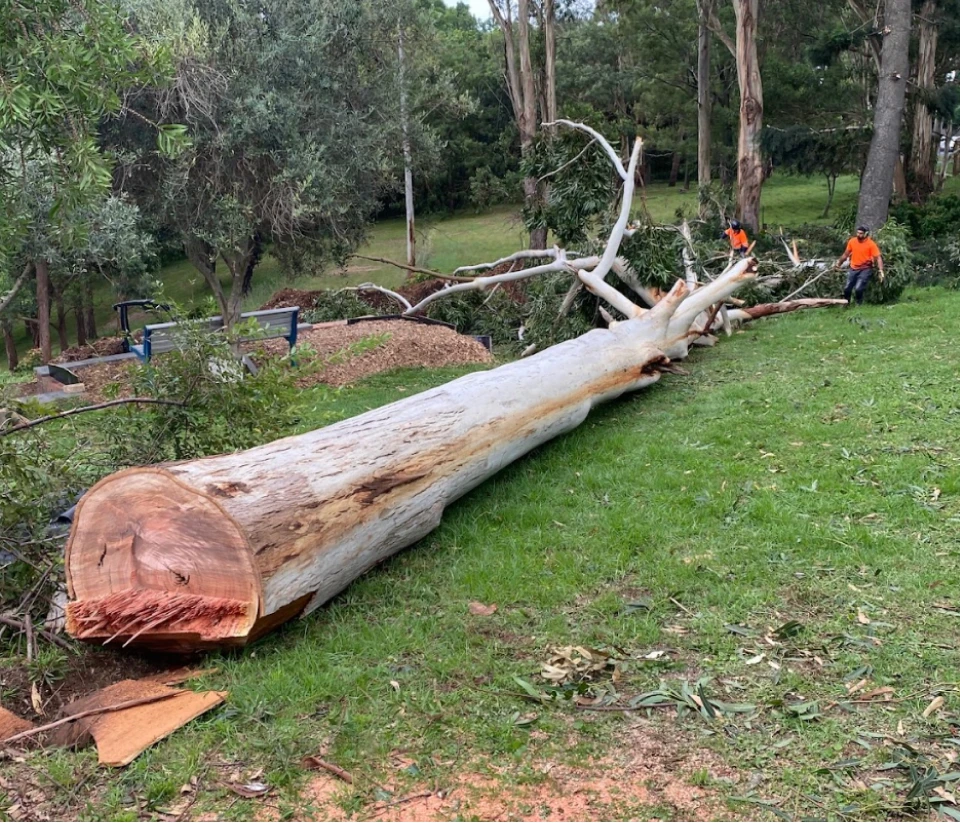
Sudden leaning after storms signals that a tree’s root system has been compromised, creating an immediate safety hazard. When a previously upright tree begins to tilt noticeably—especially following severe weather—the root plate has likely shifted or torn away from the soil, destabilising the entire structure.
What Causes Trees to Lean Suddenly?
Leaning trees after storms typically result from saturated soil conditions combined with high winds that uproot or partially uproot the tree. Heavy rainfall softens the ground, reducing the grip roots have on surrounding soil. Wind forces then push against the canopy, creating leverage that can tear roots from their anchoring position.
Soil erosion around the base gradually exposes the root system, removing the mechanical support that keeps the tree vertical. This process accelerates during heavy rains when water washes away protective soil layers. Construction activities, trenching, or grading near trees can sever major roots, eliminating crucial structural support.
How Does Root Damage Compromise Tree Stability?
Root damage indicators include visible soil heaving around the trunk base, where the ground appears lifted or cracked in a circular pattern. This heaving reveals that roots are pulling away from their original position, creating gaps between the root plate and surrounding earth.
Damaged roots cannot perform their dual function of anchoring the tree and absorbing water and nutrients. When major structural roots are severed or decay, the tree loses both physical stability and its ability to sustain healthy growth. The compromised anchorage means the tree can topple with minimal force.
Trees with exposed roots face multiple threats beyond immediate structural concerns:
- Desiccation: Roots dry out when no longer protected by soil cover
- Physical damage: Exposed roots are vulnerable to lawn equipment and foot traffic
- Nutrient deficiency: Damaged roots cannot efficiently transport minerals and water to the canopy
- Infection pathways: Open wounds on roots invite fungal pathogens and decay organisms
When Does Leaning Become Critical?
A tree leaning more than 15 degrees from vertical after a weather event requires immediate professional assessment. The angle itself matters less than
What Risks Do Dead Canopy, Repeated Branch Failures, Or Proximity To Buildings And Infrastructure Pose To Safety And Property?
Can a dying canopy indicate serious tree health problems? Large sections of dead leaves or bare branches signal that a tree’s vascular system has failed to transport water and nutrients effectively. Dead canopy symptoms appear as brown, brittle foliage that remains attached during the growing season, or entire sections of the crown that fail to produce leaves at all.
These warning signs of dying branches often start in the upper canopy before spreading downwards. When more than 25% of a tree’s crown shows dieback, the tree has entered a critical decline phase. The dead wood becomes increasingly brittle and unpredictable, losing the flexibility that allows healthy branches to bend rather than break under stress.
How do repeated branch failures signal imminent danger? Trees that drop limbs regularly demonstrate progressive structural weakness that worsens with each incident. A single branch drop might result from storm damage, but repeated failures indicate systemic problems within the tree’s architecture or internal decay that compromises wood strength.
Branch drop risks escalate dramatically when limbs exceed 10 centimetres in diameter. These substantial failures can:
- Crush vehicles parked beneath the canopy
- Damage roofing, guttering, and building facades
- Strike pedestrians or children playing in the garden
- Sever powerlines and cause electrical hazards
- Block driveways and access routes during emergencies
The frequency of failures matters as much as their size. A tree shedding multiple small branches monthly reveals ongoing deterioration that will eventually affect larger structural limbs.
Why does proximity to structures amplify these risks? Trees positioned within falling distance of homes, sheds, fences, or powerlines transform health issues into immediate safety threats. A dying branch overhanging a conservatory poses exponentially greater risk than the same branch above an open lawn.
Target zones—the areas where falling debris would land—determine urgency levels for intervention. High-traffic locations such as patios, driveways, footpaths, and children’s play areas require immediate assessment when trees display dead canopy symptoms. The combination of structural weakness and proximity creates scenarios where property damage or personal injury becomes not just possible but probable.
Trees near infrastructure face additional complications. Roots may
Why Is Professional Assessment Critical Before Any Tree Lopping?
Can untrained eyes accurately diagnose tree health problems? No—many serious tree defects remain hidden beneath bark or underground, making certified arborist inspections essential for accurate risk assessment. Attempting tree work without professional evaluation often leads to incomplete solutions that fail to address underlying structural issues.
Trained arborists possess specialised knowledge that extends far beyond surface-level observations. Their diagnostic process examines:
- Internal decay patterns using resistance drilling or sonic tomography
- Root plate stability through soil excavation and root collar inspection
- Cambium layer health by carefully removing bark samples
- Vascular system function by analysing branch dieback patterns
- Load distribution across the canopy and major limbs
These professionals identify problems invisible to property owners. A tree appearing healthy may harbour advanced heart rot, whilst seemingly minor cracks could indicate catastrophic structural failure risks. Certified arborist inspections reveal the full extent of damage before work begins.
However, it’s important to note that some initial assessments can be conducted by property owners themselves. Simple methods such as a health check can provide valuable insights into the condition of a tree before involving professionals.
Risk assessment requires understanding tree biology and physics. Arborists calculate load factors, wind resistance, and failure probabilities based on species characteristics, growth patterns, and environmental stressors. They determine whether selective pruning might preserve a valuable tree or if complete removal becomes necessary for safety.
Documentation forms another critical component of professional assessment. Arborists create detailed reports with photographs, measurements, and specific recommendations. This documentation proves invaluable for insurance claims, council permits, and legal compliance with local tree preservation orders.
The equipment used during certified arborist inspections provides data impossible to gather through casual observation. Resistograph readings measure wood density, whilst increment borers extract core samples revealing growth rates and internal conditions. Thermal imaging detects moisture accumulation indicating decay pockets.
Misdiagnosis carries severe consequences. Removing healthy wood weakens trees unnecessarily, whilst leaving compromised sections creates ongoing hazards. Professional assessment ensures interventions target actual problems rather than symptoms, preserving tree health whilst eliminating genuine risks to people and property.
Conclusion
Knowing the 7 Signs Your Tree Needs Immediate Tree Lopping empowers property owners to act before minor issues escalate into dangerous situations. Trees with large trunk cracks, fungal decay, sudden leaning, root damage, dead canopies, repeated branch failures, or pest infestations require urgent professional evaluation.
The benefits of detecting tree risks early go beyond just preventing property damage. Acting quickly also protects family members, visitors, and neighbours from falling branches or a complete tree collapse. By keeping an eye on your trees, you can reduce liability concerns and maintain the beauty and ecological value they bring to your landscape.
When you notice any signs of trouble with your trees, it’s important to consult experienced arborists right away. These certified professionals have the knowledge to accurately diagnose problems and recommend appropriate solutions. They can tell whether a tree needs selective pruning, structural support systems, or even removal—something that may not be obvious to someone without training.
Property owners can also benefit from building relationships with qualified tree care specialists before emergencies happen. Regular inspections can help identify issues while there are still viable and cost-effective treatment options available. This proactive approach ensures that your trees stay healthy and continue to enhance your property’s value instead of becoming a threat.
Here are some key actions you can take as a responsible tree owner:
- Schedule annual inspections with certified arborists
- Document any changes in your trees’ appearance after severe weather events
- Address warning signs immediately instead of putting off decisions
- Avoid attempting DIY lopping as it may increase hazards
Investing in professional tree care will pay off in the long run by making your properties safer, creating healthier landscapes, and giving you peace of mind. Remember that when trees show distress signals, they are communicating urgent needs. By responding promptly with expert guidance, you can protect everything you hold dear while also preserving these essential natural resources whenever possible.
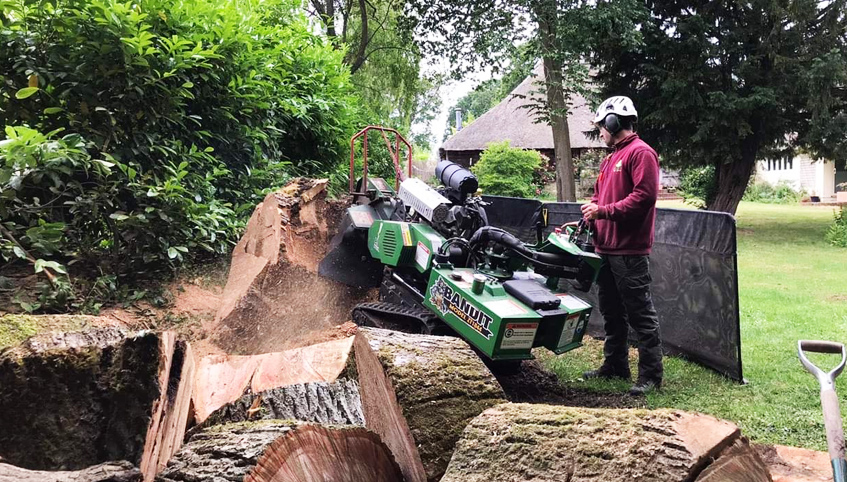
Learn more Stump Grinding vs. Full Tree Stump Removal – Which is Best for Your Garden?
